 |  |  |
|---|
《黑天鵝》 許聖泓個展
開幕 |2026.07.17 (五) 15:00
展期 |07.17 - 08.29, 2026
地點:當代一畫廊
地址:台北市松山區復建里光復南路22巷32號
⏥
「黑天鵝」效應——那些罕見、具衝擊力且難以預測的風險,不僅是金融與社會學的術語,更是當代生存的真實寫照。由恐懼、貪婪、過度自信與意識形態對立交織而成的集體焦慮,投射出一種不穩定且破碎的當代風景。複雜的現實是無數次的「選擇」與「判斷」所產生的結果。面對這樣的外部噪音,我選擇在創作的日常生活中,透過規律的節奏,將雜訊與傷害減少至最小,也是應對未知的生命實踐。
對我而言,繪畫創作的核心在於過程中對每道直覺的判斷決策,以及如何與物質相處。近年來我有意識地選擇對人體健康較無害的天然礦物色粉,自製顏料。礦石到色粉的變化歷程,因著環境作用與時間,從各礦石的形貌追溯其生長與開採環境,因此牽引出這些色粉成份在人類文明發展史中,與科技演進、產業發展甚至地緣政治交織的變動關係。這些顏料物質—古老的土紅(Ochre)、青金石(Lapis Lazuli)、鈷藍(Cobalt Blue)、釔銦錳藍(YInMn Blue)等……—在不同的歷史與自然環境洗練下展現異質的樣貌、狀態與現實。
物質顏料的選用配比伴隨著對其現實意含、美學意義,或僅是視覺美感的思考。在基底材的選擇、打底色的方式、遮蔽、噴塗與下筆的反覆程序中,下一步動作的落下伴隨著直覺探索與慣性動作,彼此作動、收斂與釋放。這些痕跡記錄著不同時刻的心理狀態、觀看經驗與生活軌跡,日復一日。
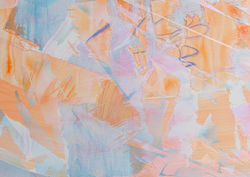
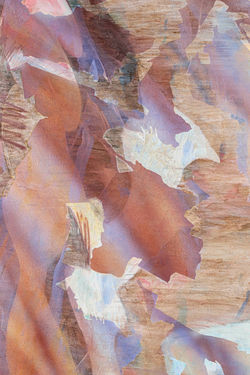
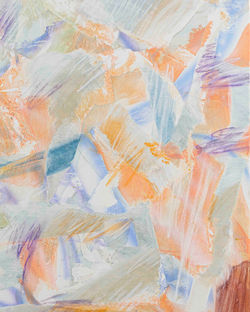
技術上,我偏好手撕紙膠帶留下的自然痕跡:在可控與慣性離心力作用間所產生的線條,不銳利且帶點模糊的邊界,透過拼貼像是在破除與篩選的過程中「尋找路徑」。筆刷、油性蠟筆與顏料的塗抹是觸覺的直接紀錄,而噴塗技法則是身體動態的影子,兩者在畫布上交織出細微漸變。
近年育兒生活也深刻影響著我的創作節奏。傍晚時分,工作室中的光線逐漸轉變,白晝的冷色調慢慢被帶有橙紅色溫的光影取代,提醒著一天工作的結束,也提醒著我即將離開創作現場,前往另一個重要的身分——父親。從工作室到家庭的移動過程,形成一種特殊的時間感。創作中的專注與探索,轉化為陪伴孩子成長的日常片刻;複雜的世界仍然劇烈運作著,暫時切換回到親子關係中體驗那些單純而直接的情感交流。傍晚的光線因此不只是自然現象,更成為一種心理狀態的轉換節點。那些柔和而曖昧的色彩關係,也逐漸滲入作品的色調。
當人工智慧逐漸參與地緣政治的戰爭衝突判斷,執行決策、影像生產與資訊辨識的今日,我更關心那些無法被簡化為數據的經驗:身體如何感受時間、情感如何附著於物質,在這些作品裡,風景不再是具體地景的描繪,而是感知經驗的投射。顏料、筆觸、色彩與身體痕跡共同構成流動的視覺場域,如同記錄著時間流逝的地層,也像意識活動留下的殘影。畫面中的生成與抹除、秩序與混亂、控制與偶然,映照著個體如何在快速變動的現實之中持續尋找平衡,重新凝視自身與世界之間的關係。
SHIU Sheng-Hung: Black Swan—Texturality of A Contingent Reality
Opening|2026.07.17 (Fri.) 15:00
Exhibition dates|07.17 - 08.29, 2026
Venue|A Gallery, Taipei, Taiwan.
The “Black Swan Effect”—rare, high-impact, unpredictable risks—is more than just a term of finance and sociology; it accurately reflects the state of contemporary life. Collective anxiety, driven by fear, greed, overconfidence, and ideological conflicts, shapes an unstable and fragmented modern landscape. Reality is a complex web stemming from countless “decisions” and “judgments.” Amid external chaos, I adopt a disciplined everyday routine in my creative process to reduce noise and damage. This approach also serves as a way to cope with the uncertainty of the unknown.
For me, the very core of painting lies in the intuitive choices and judgments made during the creative process, as well as in how one coexists with and works with materials. Recently, I have intentionally chosen natural mineral pigments that are safer for health to create my paints. The transformation from ore to pigment involves environmental influences and the passage of time. By examining the appearances of various minerals to study their growth and mining conditions, I have traced the evolving relationships linking these pigment components to technological progress, industrial development, and even geopolitics throughout the history of human civilization. These material pigments—such as ancient red ochre, lapis lazuli, cobalt blue, YInMn Blue, and more—display diverse appearances, states, and realities shaped by different historical contexts and natural settings.
Choosing and proportioning material pigments involves considering their significance, aesthetic value, or visual appeal. During the iterative process of selecting substrates, priming, masking, spraying, and applying brushstrokes, each new action emerges from intuitive exploration and habitual motion. Day after day, these elements interact, converge, and then dissipate, capturing traces of psychological states, visual experiences, and the unfolding trajectory of everyday life.
Technically, I prefer the natural marks created by hand-torn paper tape: lines formed by controlled forces and habitual centrifugal force, with soft, slightly blurred edges. In collage, this resembles “finding a pathway” amid a process of dismantling and filtering. The use of brushes, oil pastels, and pigments leaves a direct tactile imprint, while the technique of spraying actually records bodily movements. Both intertwine on the canvas to produce gentle, nuanced transitions.
In recent years, being a parent has significantly shaped my creative rhythm. As evening approaches, the studio’s light gradually shifts, with cool daylight tones giving way to warm, orange-red hues, signaling the end of my workday and prompting me to transition into another essential role—as a father. The move from the studio to home creates a distinct sense of time. Intense focus during creative exploration gives way to everyday moments of being present for my child’s growth. While the world outside continues its complex, chaotic course, I briefly reconnect with the parent-child bond, experiencing simple, authentic, and straightforward emotional exchanges. The evening light thus becomes more than a natural change; it marks a psychological transition. These soft, ambiguous colors have also gradually seeped into the overall palette of my works.
Today, as artificial intelligence plays an increasing role in geopolitical decisions about warfare and conflict, handling decision-making, image creation, and information recognition, I focus more on experiences that cannot be easily reduced to data: how the body perceives time and how emotions cling to matter. In these works, landscape no longer merely depicts tangible terrain but becomes a projection of perceptual experience. Pigments, brushstrokes, colors, and bodily traces form a dynamic, fluid visual field, like layers that record the passage of time or residual images of conscious activity. The processes of formation and erasure, order and chaos, control and contingency in these images reflect how an individual constantly seeks balance in a rapidly changing reality, re-examining the relationship between the self and the world.